
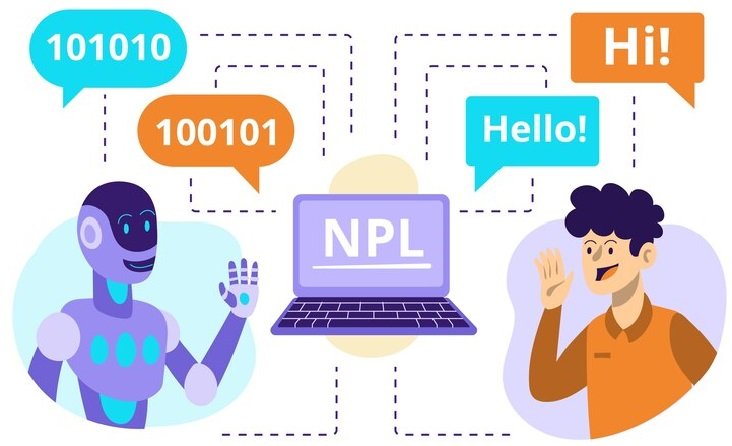
Nowadays, artificial intelligence is booming in the industry. The one thing that comes to mind is how machines understand and respond to human language. The answer is natural language processing, so in Unlocking Human-Machine Communication blog, we will discuss how machines addresses the complexities of human language.
Natural Language Processing Basics
First of all, we need to know how NLP navigates between machines and human language. There are a few key factors to bridge the gap between the two. These basic elements for developing natural language processing systems to understand the complexities of human language include:
1. Tokenization: Sentences are broken down into smaller parts, for example, words or phrases, that help to analyze.
2. Part of speech tagging: In this, different parts of the sentence are tagged; for example, parts of speech are identified for each token, helping machines understand the role of the words in each sentence.
3. Named Entity Recognition (NER): As the name suggests,the names of the people,places and organisations are identified and classified within the text.
4. Syntax and parsing: In this, the grammatical structure of sentences are analysed to understand the relationship between the words.
Challenges In Natural Language Processing
1. Ambiguity: Words frequently have more than one meaning; therefore, it’s important to consider the context while trying to clear things up.
2. Context-Dependence: Words and phrases can take on different meanings depending on the surrounding material.
3. Cultural Nuances: Language and culture are closely related, which makes interpretation more difficult.
In order to develop strong natural language processing systems that can comprehend and react to the wide range of human communication styles, these obstacles must be resolved.
Technologies And Tools In Natural Language Processing
Developers and researchers rely on a number of tools and technologies to overcome the complexities faced during the development of NLPs.
Natural Language Toolkit (NLTK), which is a popular Python library used by both academics and industry,. It is a comprehensive library that offers capabilities for a wide range of NLP activities.
Spicy is an innovative NLP toolkit for Python that offers pre-trained models for tasks like named entity identification and part-of-speech tagging and is renowned for its effectiveness and user-friendliness.
Bidirectional Encoder Representations from Transformers, or BERT: BERT is a pre-trained language model breakthrough that is commonly used for jobs like sentiment analysis and question answering. It is particularly good at recognizing context.
Natural Language Processing Applications
NLP has influenced many facets of our daily lives, pushing technological developments and revolutionizing user interfaces. Some of the useful applications are:
Chatbots and virtual assistants: Popular chatbots on websites and virtual assistants, such as Siri, employ natural language processing (NLP) to comprehend and answer user questions in a friendly way.
Sentiment Analysis: Businesses can measure customer thoughts and comments by using natural language processing (NLP) to analyze and detect the sentiment contained in text.
Language Translation: Programs like Google Translate employ natural language processing (NLP) algorithms to translate text between languages, aiding in the translation of foreign languages.
Information Extraction: Natural Language Processing (NLP) helps extract relevant information from unstructured text. This is useful in industries like healthcare, where medical records can yield important information.
From being a theoretical idea, natural language processing has developed into an essential component of modern artificial intelligence. The knowledge gained from this study highlights how important NLP is for understanding the complexities of human language. It’s clear that natural language processing (NLP) is more than just a technical achievement when we see chatbots, sentiment analysis influencing corporate strategy, and language translation removing obstacles to international communication.
Unlocking Human-Machine Communication explore NLP basics, challenges, tools, and applications that help in advancing this field. Whether you are a developer who is ready to create NLP applications or a learner who is curious about the capabilities of machines that understand and communicate with humans, the journey into the world of NLP is an exciting exploration of language awareness and technology. We should expect even more significant effects on our daily lives as NLP develops, opening the door to a time when machines will be able to fully understand the complexities of human communication.
You may also have interest in Revolutionizing Healthcare with AI and The Best 5 AI Developments In Education to read about Natural Language Processing application use in real world